Free Consultation
for your next home improvement project!
X
Get Started With A Free Design Consultation -
for your next home improvement project!

Thank you! Your submission has been received!
Oops! Something went wrong while submitting the form.

Is Your Deck Safe? 10 Danger Signs Your Deck Is Unsafe
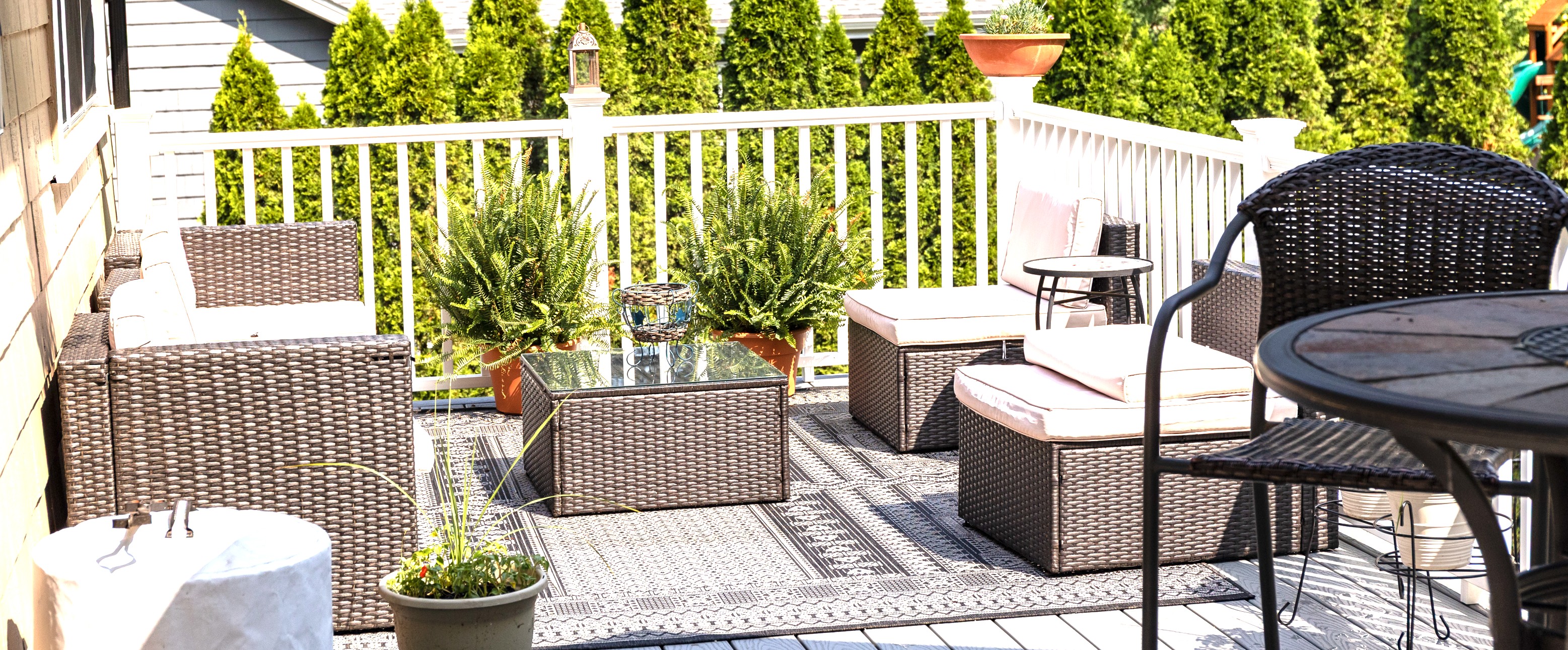
From a distance, your deck might look fine, but safety problems can arise where you least expect them. Loose railings, softwood, failing hardware, rot, or hidden framing damage rarely appear overnight. These issues have a way of creeping in slowly, making them easy to overlook until you step out one day and something moves, sags, or just feels wrong underfoot.
The risk isn’t just theoretical. According to the U.S. Consumer Product Safety Commission, from 2016 through 2019, there were roughly 2,900 reported injuries and two deaths from deck, balcony, or porch failures. That’s why NADRA recommends that homeowners check their decks every year, paying close attention to problem areas such as loose connections, rotting wood, and wobbly railings.
Don’t worry, you’re not expected to diagnose every structural detail on your own. Your job is to catch warning signs early, understand what they might mean, and act before a small problem becomes a serious safety hazard for you or your family.
Why deck safety problems are easy to miss
You probably notice what everyone notices first, a stained board, a weathered patch, maybe a few popped nails. But the real trouble often starts where you’re not looking underneath, where water pools, or hardware rusts. Railings might loosen one season at a time, stairs can shift bit by bit, and the spots where your deck connects to the house can weaken long before there’s any obvious damage up top.
That’s especially true here in Massachusetts and across New England. Freeze-thaw cycles, heavy snowfall, rain, and all that spring mud put decks through a lot every year. Plus, safety standards keep changing. Massachusetts follows the 2021 International Codes, which means an old deck that’s still standing might not meet today’s strength or guardrail safety standards.
So, what should you be watching for?
Safety Note: Please take care as you go. Move slowly, watch your step, and don’t take risks if something feels unsafe. If you spot signs of major structural trouble, it’s best to stay off the deck and call in a professional to take a closer look.
1. Loose or wobbly railings
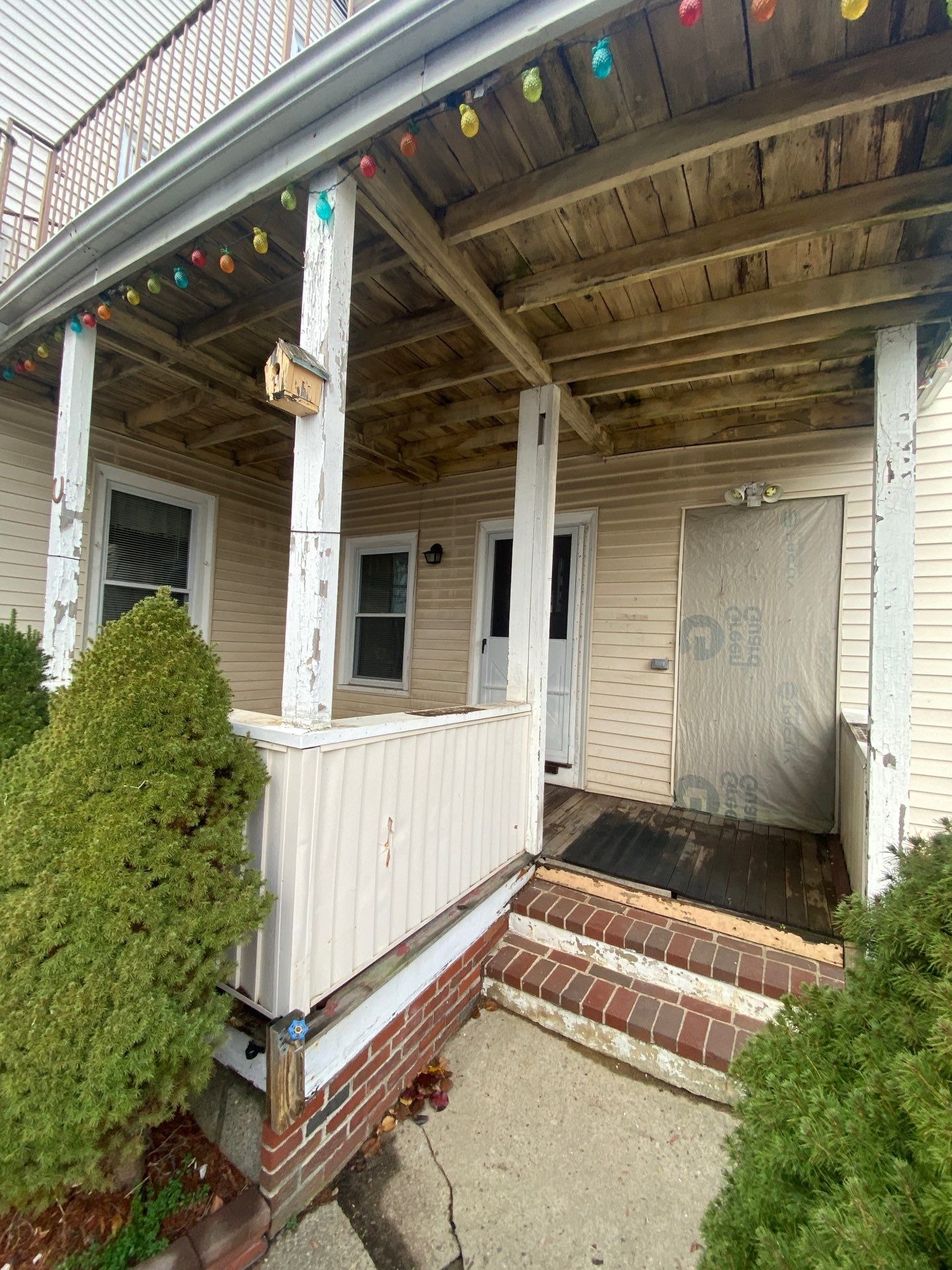
When you press on a railing, it should feel rock solid. If it wobbles, rattles, or shifts even a little, that’s a problem worth fixing now, not later. Sometimes, it’s as simple as tightening a bolt or replacing a bracket. But if the whole railing moves or the posts seem loose, there could be a bigger issue hiding in the framing underneath.
A loose railing isn’t just cosmetic; it’s one of the clearest signs your deck needs attention and poses an immediate safety concern.
2. Surface Damage: Wood vs. Composite
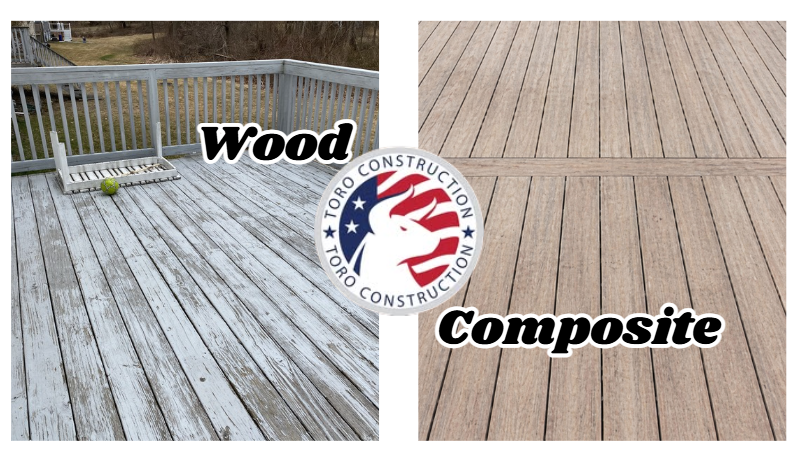
For wooden decks, if a board feels soft underfoot or you can easily press into it with a screwdriver, moisture damage may already be advanced. Surface discoloration alone does not always mean failure, but softness is different. Soft wood usually signals decay, and decay tends to spread once water gets in and the material stays wet. This risk increases during the mud season, when lingering moisture can accelerate decay. You might see this on your floorboards, stair treads, posts, or trim. Once you find rot, assume there may be additional hidden damage nearby.
Composite boards resist rot, but they can show surface wear in their own ways. You should watch for fading or discoloration from sun exposure, stains that don't wash away, deep scratches or gouges, warping, or boards that feel loose or spongy. Mold or mildew can also develop on the surface, especially where debris collects. If you spot any of these issues, give the deck a closer look to make sure the problem isn't more than cosmetic.
3. Cracked, split, or warped deck boards
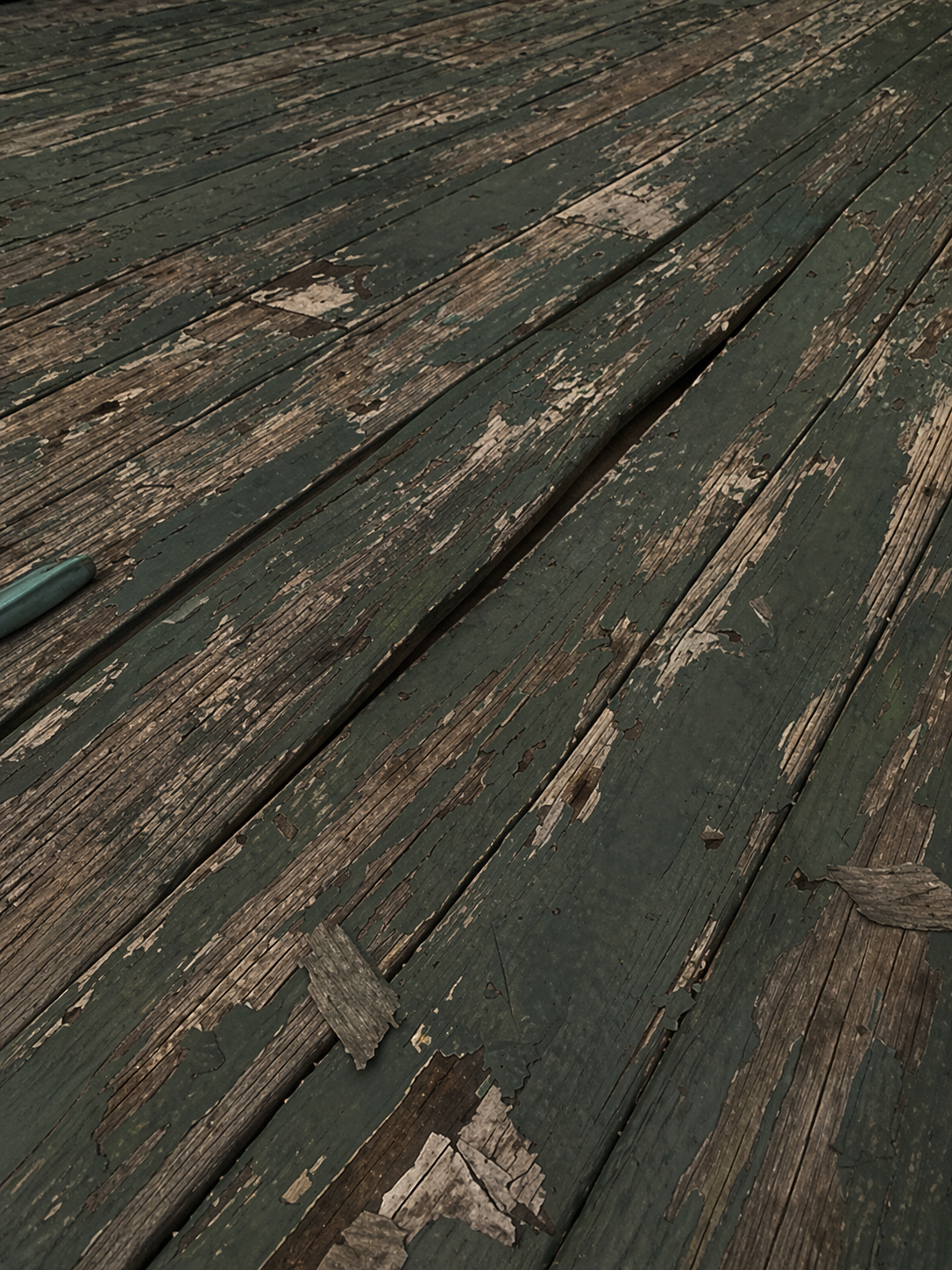
Not every crack signifies an unsafe deck. Wood moves. Small surface checks can occur with age and exposure to weather. The main concern here is larger cracks, splitting at fasteners, lifting edges, or boards that have started to cup, twist, or pull away from their supports.
These signs can indicate long-term exposure, poor drainage, weakened fasteners, or a deck surface nearing the end of its useful life. If the issue is widespread, it may be less about replacing one or two boards and more about looking at the deck as a whole.
4. Movement when you walk across the deck
A safe deck should feel solid. If it bounces, sways, or shifts as people walk across it, something is off. That movement may result from undersized framing, loose hardware, aging connections, or weakened structural members.
You should always take this sign seriously. If your deck moves underfoot, the problem is rarely just on the surface, it usually means the structure underneath isn’t doing its job.
5. Sagging or uneven areas
If part of the deck looks lower than the rest, that may indicate failing supports, shifting footings, weakened joists, or long-term water damage. Sagging can be subtle at first. You may only notice it when furniture sits unevenly, or water pools where it did not before.
Once a deck starts to dip or lean, it needs more than a cosmetic fix. The right question is no longer how to make it look better. It is what’s causing the deck to move in the first place.
6. Rusting or corroded hardware
Deck safety also depends heavily on connections — screws, bolts, hangers, brackets, and anchors all matter. When those parts rust or corrode, the deck can lose strength where it counts most. NADRA’s consumer checklist specifically flags corroding fasteners and connectors as a key issue to watch for during a deck check.
This is especially important where pressure-treated lumber meets metal connectors. Hardware that looks heavily corroded, stained, or separated from the wood should not be ignored.
7. Loose stairs or unstable steps
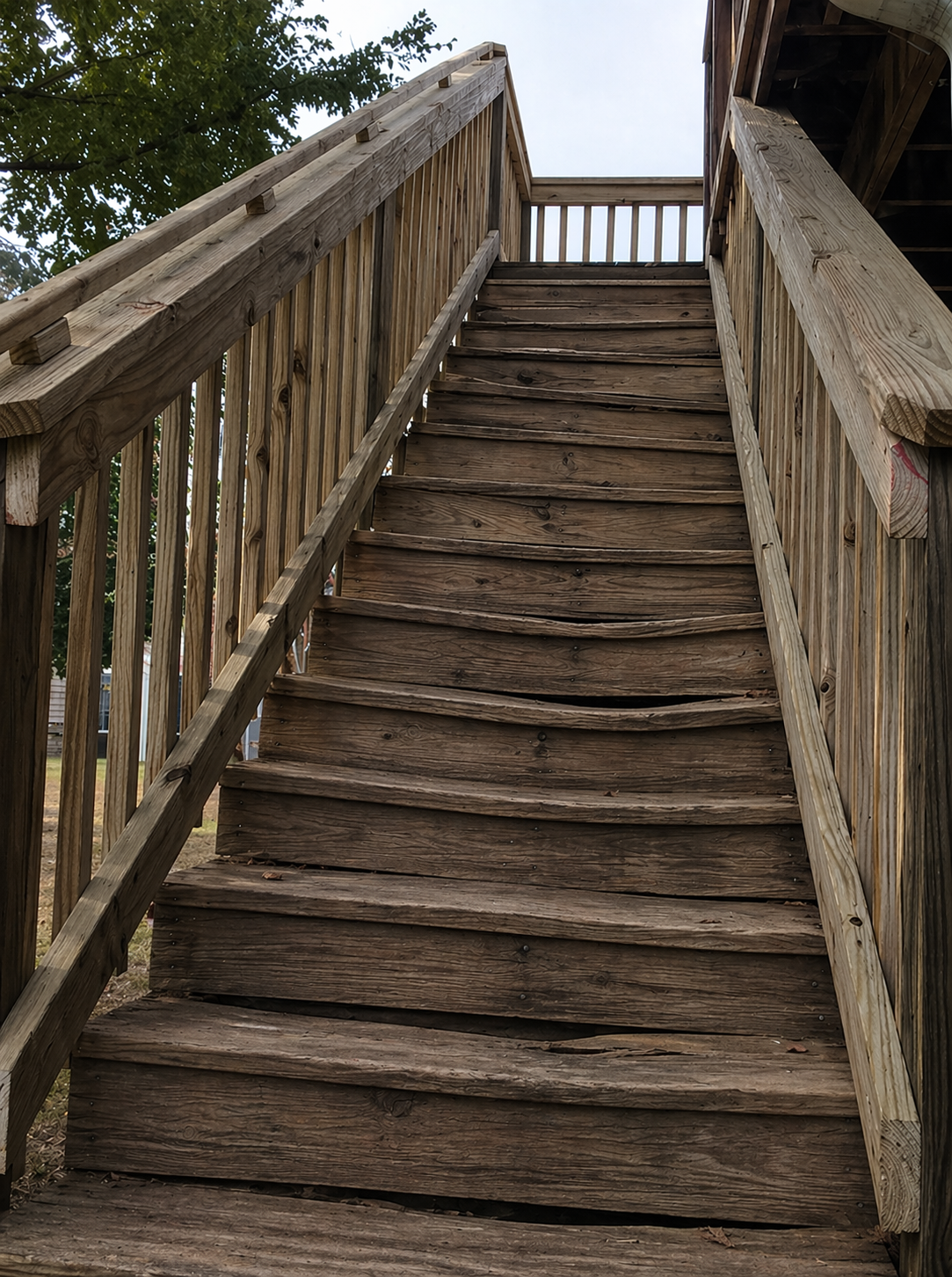
Deck stairs take concentrated wear. They also create one of the most common safety risks because people use them while moving, carrying things, or not looking down. If the steps rock, shift, tilt, or feel weak, the problem needs attention.
Sometimes the issue is isolated to treads or risers. Sometimes the stringers, footings, or attachments have started to fail. Either way, unstable stairs are not a wait-and-see problem.
8. Visible damage around posts, joists, or beams
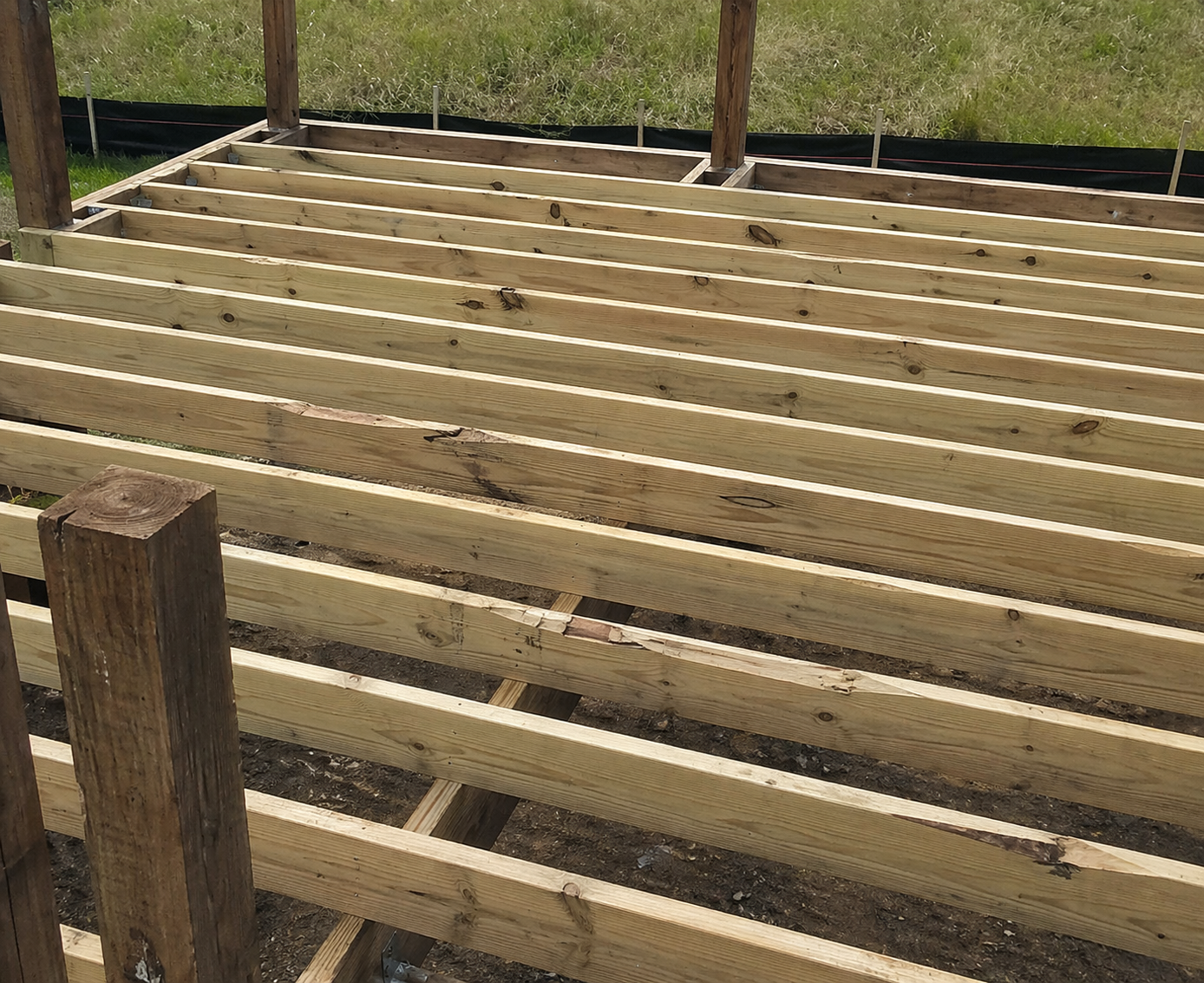
The framing carries the load. If you can see rot, splitting, insect damage, major cracking, or moisture deterioration around support posts, joists, or beams, that is a structural concern, not a surface one.
You probably don’t look underneath your deck very often, especially if the fascia or skirting blocks your view. It’s easy to clean the top and forget about the support system below, but that’s often where the biggest warning signs are hiding. If you can see any damage or compromised framing, it’s time to take a closer look.
9. Problems where the deck connects to the house
One of the most important parts of a deck is the connection back to the home. If that area shows signs of pulling away, water damage, loose hardware, or flashing problems, the risk goes up, and fast. NADRA’s deck evaluation materials emphasize checking major connection points during a proper review.
You do not need to diagnose the ledger detail yourself, but if your deck appears to be separating from the house or shows visible deterioration at that connection, stop treating it as a cosmetic issue.
10. Age and long-term wear
Age by itself does not make your deck unsafe. A well-built, well-maintained deck can last a long time. But age changes how you should view wear. If your deck is older and has multiple issues: Loose railings, soft boards, rusting hardware, shifting stairs, or visible framing damage, the conversation shifts from repair to replacement.
Older decks also may not reflect current building expectations. Massachusetts’ current code framework is based on newer model codes and amendments, so an older deck that predates those standards may need a more careful evaluation when problems appear.
Problems that need immediate attention
Some issues can wait a short while as you plan your next steps. Others should change how they use the deck right away.
If your deck has major movement, soft spots, loose guardrails, shifting stairs, visible structural rot, or signs that it may be pulling away from the house, treat it as an active safety concern. The CPSC’s safety materials advise checking for loose hardware, rotting boards, and eroding foundations, and recommend professional inspection when possible.
If you notice any of these problems, limit use of the deck until it’s been professionally inspected.
Repair or replace?
That depends on how isolated the problem is.
A deck with one bad tread, a few surface boards, or a limited railing issue may be repairable. A deck with widespread rot, multiple failing connections, structural movement, and age-related wear in several areas may not be worth patching together.
The right decision is usually based on three things:
- how extensive the damage is,
- whether the framing is still sound,
- and whether the deck can be repaired safely without turning into a larger rebuild anyway.
Think of it like your car: if you have minor cosmetic damage or need new tires, brakes, etc. It is almost certainly not worth buying a new car; just fix the minor problems instead of breaking the bank. The same applies to your deck.
You can waste money if you focus on the visible symptom instead of the underlying condition. A better approach is to figure out whether the issue is local or systemic.
What to do if you spot a deck safety issue
If your deck shows any signs of damage or wear, the best first step is to schedule a FREE estimate with a qualified contractor. It takes no more than a few minutes and doesn’t cost a penny! A contractor can review the deck's visible condition, identify likely problem areas, and help you determine whether repairs are possible or replacement makes more sense.
A simple deck safety checklist for homeowners
Walk the deck and ask yourself a few basic questions:
- Does the railing move when I push it?
- Do any boards feel soft, weak, or spongy?
- Are there cracks, splits, or warped boards in multiple areas?
- Do the stairs feel solid?
- Does the deck bounce, sway, sag, or lean?
- Can I see rusting hardware or loose connectors?
- Is there visible rot around posts, joists, or beams?
- Does the deck appear to be pulling away from the house?
NADRA recommends regular deck evaluations, and CPSC also advises watching for loose hardware, rotting boards, and foundation issues as part of basic outdoor safety checks.
Ratings & Reviews
See what others are saying about us!


Inspiration Gallery


